

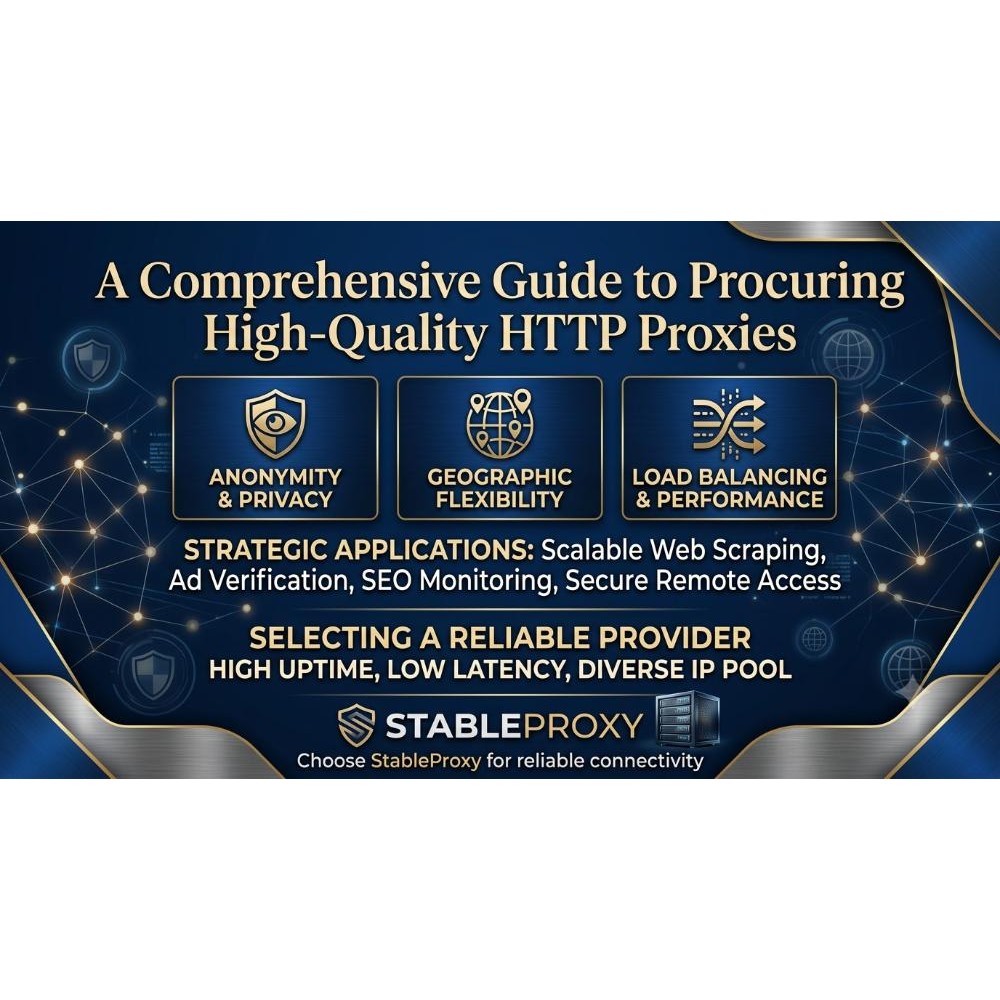
A Comprehensive Guide to Procuring High-Quality HTTP Proxies
25/07/2026 | Prodavachi
In an era defined by hyper-connectivity and data-driven commerce, the necessity for robust digital privacy and network anonymity has transitioned from a niche technical requirement to a fundamental business imperative. As organizations and individuals navigate increasingly complex web infrastructures, the utilization of proxy servers—specifically those utilizing the HTTP protocol—has emerged as a cornerstone strategy for maintaining operational integrity, security, and scalability.
In the contemporary digital economy, your network's reliability is directly proportional to your operational success. Choosing to buy proxy http from a reputable source ensures that your activities—whether they involve complex automated tasks or sensitive private browsing—are conducted with maximum efficiency and minimum risk. By leveraging professional-grade proxy technology, you empower yourself to navigate the internet’s complexities with confidence, ensuring that your digital footprint remains secure while your objectives are met with precision.
Understanding the Role of HTTP Proxies in Modern Networking
At its core, an HTTP (Hypertext Transfer Protocol) proxy acts as an intermediary server between a client’s device and the target website or service. When a user initiates a request through an HTTP proxy, the request is routed through the proxy server before reaching the destination. The destination then sees the IP address of the proxy rather than the original source.
This mechanism serves several critical functions:
- 1. Anonymity and Privacy: By masking the true origin of a connection, users can browse the web without exposing their personal identifiers or geographic location to third-party entities.
- 2. Geographic Flexibility: HTTP proxies allow users to bypass regional restrictions by simulating access from different countries, enabling seamless content delivery across borders.
- 3. Load Balancing and Performance: For enterprises, proxy servers distribute incoming traffic across multiple servers, ensuring that no single node becomes overwhelmed, thereby maintaining consistent speeds for the end-user.
Strategic Applications of Proxy Procurement
The decision to "buy proxies" is rarely a matter of casual browsing; it is typically driven by specific technical requirements such as web scraping, automated testing, or large-scale data mining. For these operations, standard residential connections are often insufficient due to rate limiting and IP blacklisting.
By investing in professional proxy services, organizations can achieve:
- Scalable Web Scraping: High-volume data collection requires a rotating pool of IPs to avoid detection by anti-bot mechanisms. HTTP proxies provide the necessary infrastructure to cycle through thousands of identities seamlessly.
- Ad Verification and SEO Monitoring: Marketing firms utilize proxies to view advertisements as they appear in different regions, ensuring that global campaigns are performing optimally without being skewed by their own local network data.
- Secure Remote Access: For distributed teams, HTTP proxies provide a secure tunnel for accessing internal resources while mitigating the risks associated with public internet exposure.
Selecting a Reliable Provider: The Importance of Infrastructure
Not all proxy services are created equal. When selecting a provider to facilitate your networking needs, several technical benchmarks must be evaluated to ensure reliability and longevity. A premier service should offer high uptime, low latency, and a diverse pool of IP addresses that remain "clean" (i.e., not flagged by security firewalls).
StableProxy stands as a prominent example of such infrastructure providers. By offering specialized proxy solutions, they cater to the demands of sophisticated users who require more than just basic connectivity; they provide a stable environment where data integrity and connection persistence are prioritized.